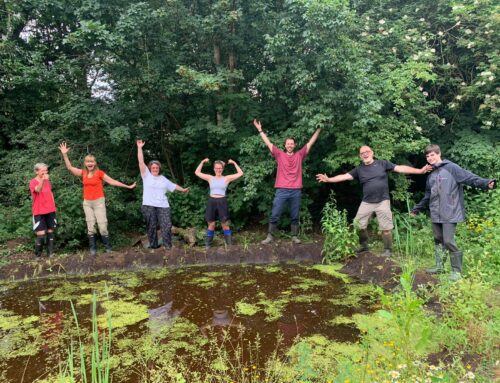
Field Surveys on a hidden oasis by Louisa Webster
DATE
28/06/2023
Share This Story On Your Socials!
Feltham marshalling Yard: Field Surveys in a hidden wildlife haven
This work is all part of a series of nature engagement days being conducted on the Feltham Marshalling Yard. This is a collaborative effort between Citizen Zoo, The Community Brain and the site’s owners, South West Rails. This project brings together the expertise and passion of these organisations to create a unique opportunity for nature conservation, community engagement, and education. This blog was written by Louise Webster, who joined Citizen Zoo on work experience in June 2023.

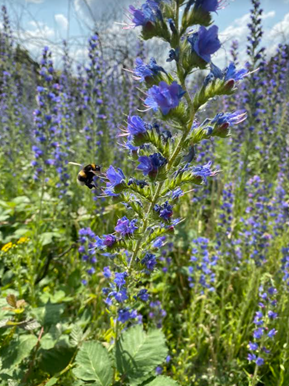
A bumblebee on vipers bugloss
On the 22nd of June, Citizen Zoo joined the Biological Recording Company to spend the day capturing and recording several different species of insects, including flies, spiders, butterflies, and ants at the South West Rails-owned Feltham Marshalling Yard. Today, this area is a hive of biodiversity and hosts a wide range of wildlife, including five species of bat.
However, around 100 years ago, this space was wildly unrecognisable - a spread of rail tracks and wagons, used to transfer freight traffic across the country. With 51km of track and 2500 wagons travelling along them every day, it was one of the largest marshalling yards in the country. The trains began to transport hauls of containers, chemicals and minerals before it was discontinued and abandoned shortly after in 1969, due to the rise of road transport.
Since then, the site has been largely left to nature and in turn become a beautiful, rewilded landscape with an abundance of insects, birds, and bats. This was clear on the day, as the group of volunteers recorded over 40 different species of insect, highlighting how this nature reserve, which was once an industrial wasteland, has been successfully restored to a wildlife haven.

Clouded drub caterpillar
After a short 15-minute walk from the meeting point on the other side of Leitrim Park, we reached our destination in the forest and set up base camp in a shady area and got to work searching and recording wildlife. We used butterfly nets to sweep over long grass and woodland areas to collect any insects and then carefully transferred them into vials, before using handheld magnifying glasses to identify any key characteristics or features, before carefully returning them back into their habitat.
One example of the most interesting finds was a large Volucella pellucens, a type of hoverfly with large striped wings and an almost translucent-looking middle. We also discovered a couple of small, green Orthoptera (Grasshoppers), highly recognisable from their strong large rear legs, which allow them to leap large distances, and bright red eyes, which help to dissuade predators. Furthermore, we captured a clouded drab caterpillar, which was approximately 25mm long, had 14 legs, and was bright green with white eyes. Furthermore, we compared the species of insects that we found in different habitats - such as shady woodlands vs open grassland. We also searched under debris such as old sheets of metal and fallen branches or log piles.
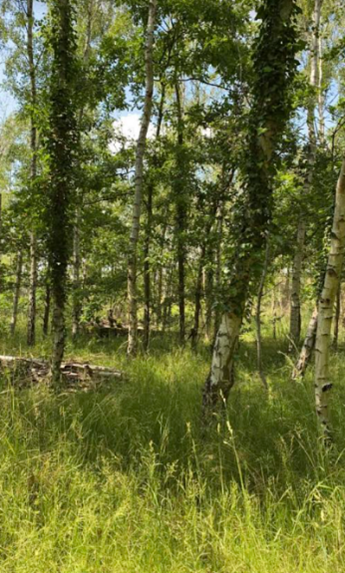
Example of woodland habitat on site
Many species of insect are threatened or endangered, with 40% of species predicted to go extinct in the next few decades. This would have catastrophic impacts for the entire ecosystem, as all plants and animals rely on insects to pollinate and are used as prey. Protecting the Feltham Marshalling Yard will help provide safe and thriving habitat for many species that are vital for the survival of the entire food chain. It is extremely important that these areas are treated with respect and care and are managed appropriately to ensure they continue to survive and provide habitat for wildlife long into the future.
Get Involved
If you would like to support this and other projects further, please do consider making a donation today or becoming a member.